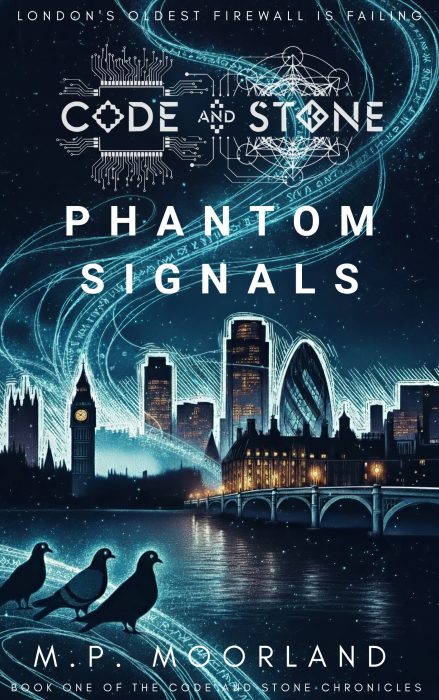
Over the past five months I’ve deleted two chapters, merged two others, and rewritten a scene that then cheerfully dismantled roughly seventy per cent of my manuscript. Then, as I wasn’t totally happy, I wrote an entirely new chapter from scratch and changed the title.
I also briefly considered whether falconry might be a more rewarding creative outlet. Hawks, I reasoned, are at least openly indifferent to your work rather than producing fourteen pages of politely devastating structural notes about it.
The developmental feedback was, irritatingly, correct about almost everything.
If you’ve not worked with a developmental editor before, it’s tempting to imagine the job involves correcting grammar and suggesting better adjectives. It doesn’t. A developmental edit asks structural questions that are considerably less comfortable: why is this chapter here, does this scene actually move the story, is this character making a decision, or is the plot just dragging them around by the collar?
When you’ve lived with a manuscript for a year or two, every chapter starts to feel earned because you remember how long it took to write. You know the conversations that never made it onto the page. You know why a throwaway line matters. Readers don’t. They only see what’s in front of them.
Accepting one change made everything else move. One rewritten scene exposed a weakness. That fix revealed a pacing problem. The pacing problem exposed a character beat that no longer worked. I ended up rebuilding sections I’d previously considered finished while muttering at my laptop in a way that concerned Mrs Moorland.
It’s like debugging code, something from a past life of mine. The error rarely appears where the actual fault is. You trace it backwards until you find one faulty assumption made hundreds of lines earlier, and when you fix that, a surprising number of other problems quietly resolve themselves.
I can already see the difference. The story moves faster. Stephen, my protagonist, now makes stronger decisions. The world reveals itself instead of stopping to explain itself. The emotional moments land because they’re no longer competing with scenes I kept purely because I’d grown attached to them.
The deleted chapters weren’t failures. They were scaffolding, useful while the structure was going up, yet redundant once it could stand without them.
It was worth it.
I’m doing a final read-through now. Mostly checking I haven’t left any loose threads dangling. It’s a quieter process than the rewrite, with less demolition and more walking the finished rooms, making sure nothing creaks.
Phantom Signals is in better shape than I honestly thought possible six months ago. That’s entirely due to being willing to hear that the first version wasn’t quite right and doing something about it rather than arguing with the notes.
Worth every deleted word.
Photo by Emmanuel Phaeton – Unsplash